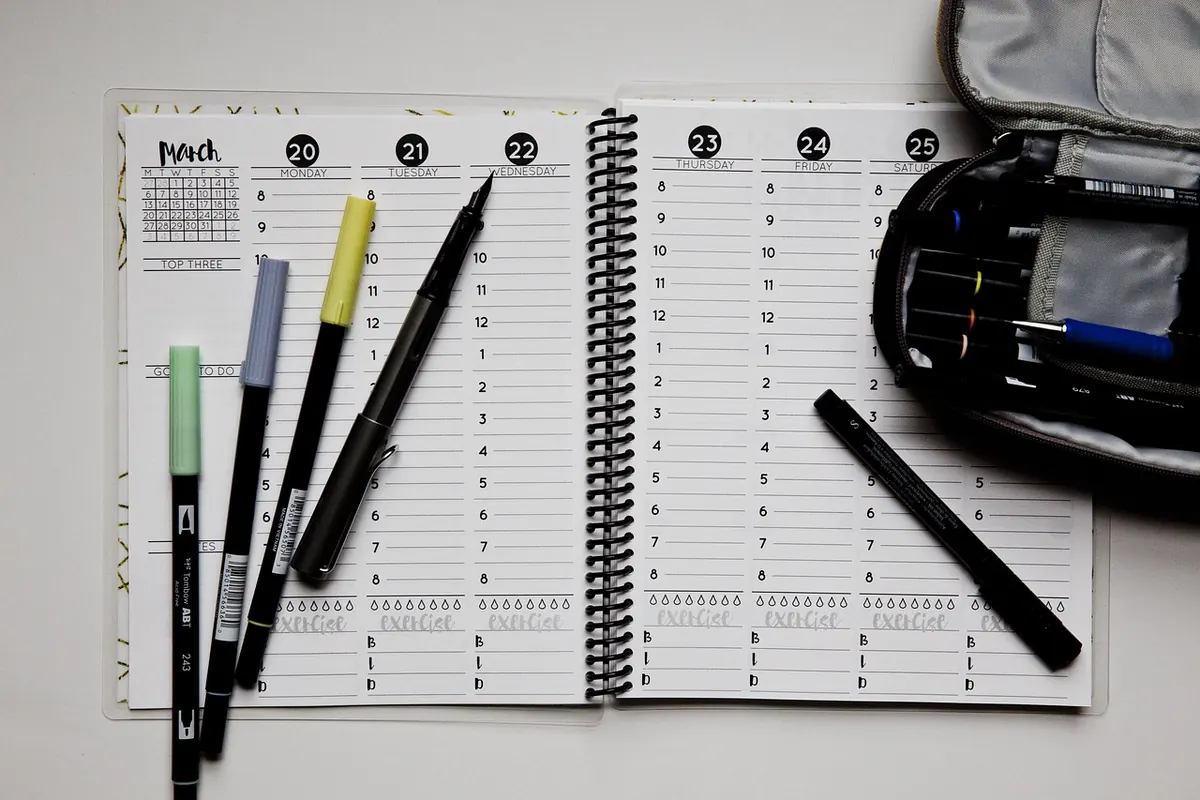
Most note-takers don't have a note problem. They have a timing problem. Writing things down happens all week, nearly by accident: in meetings, on calls, on the walk back from the shop. What almost never gets scheduled is the return visit — the twenty minutes where a scrawled page becomes a task, the hour where three stray ideas turn into an argument you can actually use.
When that return visit has no home in the calendar, notes stay raw forever and deep work slides into the gaps between meetings. The fix is not more discipline. It is deciding in advance when the note work happens, and putting it somewhere the shallow work cannot reach. That is time-blocking, applied to the habit that is supposed to make you sharper.
Three jobs your notes are doing
Notes do not all ask for the same thing. Mixing them up is why a review session can feel pointless and a writing block can stall.
- Capture. Fast, low judgement, in the moment. You are not deciding where something belongs; you are getting it out of your head before it goes.
- Review. Slower, tidy, decisive. You read what you captured, delete what is dead, and turn the rest into tasks, questions or pointers.
- Synthesis. The slowest and the reason the system exists. You gather notes on one subject and write something new from them: a proposal, a lesson plan, an article, a decision you can defend.
Capture fits into small gaps. Review needs routine. Synthesis needs a long, quiet block and one clear question to answer. Schedule them as if they were three different clients.
Sizing the blocks
Capture: two to ten minutes, several times a day. Keep a single inbox — one notebook, one app, one page — and empty it quickly. If you stop to organise during capture, you will start skipping capture.
Review: twenty to forty-five minutes, once or twice a week. Same slot each time, ideally first thing on a Monday or near the end of a working day. Work top to bottom, make a decision on every item, and stop when the time is up. A half-finished review you repeat weekly beats a perfect one you manage twice a year.
Synthesis: sixty to ninety minutes minimum. Anything shorter and you spend the whole block remembering what you were thinking about last time. Two hours is better. Three is generous and rarely available.
A week built around deep work
The trick is to place the review blocks before the synthesis blocks, so the material is ready when the quiet hours arrive. A workable shape:
- Monday, first twenty minutes. Empty the inbox. Sort items into projects, tasks and "read again". Do not start working on any of them.
- Tuesday, forty-five minutes after lunch. Review block. Link new notes to existing ones, write a one-sentence summary at the top of each long note, delete anything you know you will never return to.
- Wednesday morning, ninety minutes. Synthesis. One question, one document, no notifications. This is the block the rest of the week is protecting.
- Thursday, fifteen minutes near the end of the day. Open-loop sweep. Capture anything unfinished and write tomorrow's first task underneath it.
- Friday, thirty minutes. Review the notes themselves. What did you actually produce this week? What is still raw? What is clogging the inbox?
That is roughly two and a half hours of deliberate note work, and it supports the parts of your job that need thinking rather than reacting. Shift the days if you like, but keep the order.
Defend the synthesis block first
If you only protect one block, protect that one. Put it in the calendar as a meeting with yourself and give it a name that sounds like work: "Draft: onboarding guide", not "notes". Refuse to spend it on email. If a colleague asks for that slot, offer a different hour the same day rather than surrendering it.
Making the blocks stick
- Anchor review to something that already happens. After you close the laptop, before you leave the building, after your last coffee. New habits survive when they are tied to old ones.
- Leave slack. Book no more than two-thirds of a working day. The unbooked third is what absorbs the interruptions that will certainly arrive.
- Lower the friction. Notebook open at the right page, app already loaded, document already named. A thirty-second setup is enough to kill a fifteen-minute block.
- Write down the next action before you stop. "Read section three of the report" is a far easier start than "carry on with notes".
- Finish with a shutdown line. One sentence describing where you got to. It saves ten minutes of confusion next time you open the file.
When the week falls apart
Some weeks will. A deadline lands, a child is ill, three meetings become six. Do not abandon the system; shrink it. The minimum version is ten minutes: empty the inbox and choose the single note task for tomorrow. That keeps the loop closed and stops the backlog from becoming a wall you refuse to look at.
If you are already several weeks behind, do not attempt to review everything. Take the last seven days, process those, and move older notes into an archive folder with one honest sentence: "keep for reference, not for action". A backlog you have consciously parked weighs less than one you keep meaning to sort out.
Start with one block
Choose a single synthesis block for next week and one review slot to feed it. Twenty minutes on a Friday and ninety minutes on a Wednesday is enough to prove the point: notes you return to make the deep work easier, and notes you never revisit quietly cost you the hours you were trying to protect.
Put both blocks in the calendar now, before the week fills up. Then keep that promise the way you would keep one made to somebody else — because the person waiting on it is the one doing the thinking.
Photo: rayedigitaldesigns / Pixabay